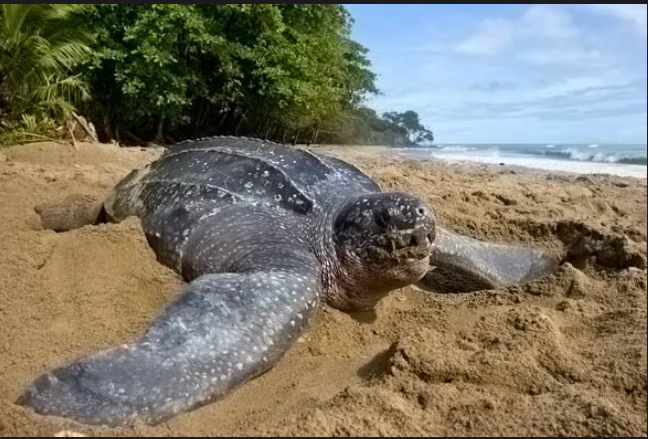
the leatherback sea turtle is the largest species of turtle alive.
the leatherback sea turtle is the largest species of turtle alive. It can grow up to 2.7 meters (8 ft 10 in) in length and weigh up to 500 kilograms (1,100 lb). The largest verified specimen ever found was discovered on the Pakistani beach of Sandspit and measured 213 cm (6.99 ft) in CCL and 650 kg (1,433 lb) in weight. Additionally, the leatherback sea turtle is the largest turtle in the world, with adults averaging six feet (1.8 meters) in length and a weight range of 500 to 1,500 pounds (226.8-680.4 kilograms). The largest leatherback on record was nearly 10 feet long and weighed over 2,019 pounds.The largest leatherback turtle ever recorded was a male found dead on the beach at Harlech, Gwynedd, in north-west Wales, on 23 September 1988. It measured 2.91 m (9 ft 6.56 in) in total length over the carapace, 2.77 m (9 ft) across the front flippers and weighed over 2,000 pounds.
Leatherback Baby Count
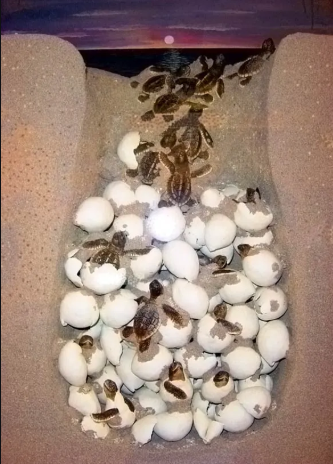
The survival rate of baby leatherback turtles is extremely low. It is estimated that for every 1,000 hatchlings born, only one will make it to adulthood, and this statistic is further exacerbated by human activity. The challenges faced by hatchlings include predation, habitat destruction, and human interference, such as beach development and artificial lighting that disorients them. Additionally, leatherback turtles face threats such as entanglement in fishing gear and vessel strikes, which can further reduce their chances of survival.
How Many Eggs Leatherback Turtles Lay

leatherback turtle typically lays between 50 to 100 eggs per clutch. During a single nesting season, a female leatherback can lay between 4 to 9 clutches of eggs. For example, some females may lay up to nine clutches in one season, with each clutch containing an average of 110 eggs. Additionally, it is noted that a female leatherback can nest between five and seven times during the nesting season, with each nest containing approximately 100 eggs. The number of eggs laid can vary depending on the species and the size of the turtle
Leatherback Nest Depth
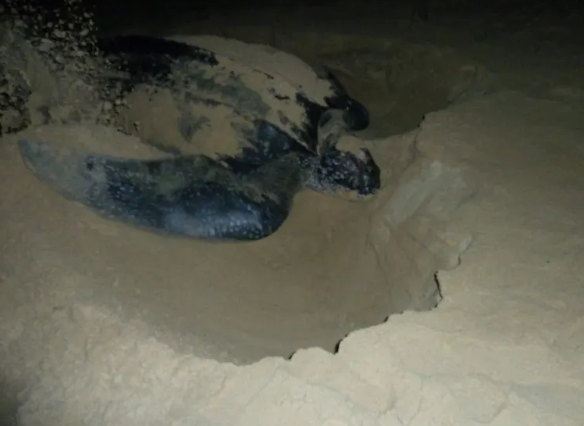
The depth of a leatherback turtle’s nest is not explicitly mentioned in the provided context. However, it is noted that a leatherback nest’s incubation period is approximately 60 days long. Additionally, leatherback turtles dig a body pit and a nest chamber at the bottom of the pit when nesting. While the exact depth of the nest is not specified, it is clear that the nesting process involves creating a chamber deep enough to protect the eggs.
Leatherback Turtle Dives
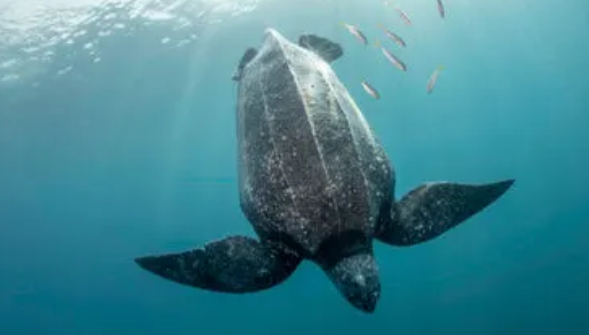
Leatherback turtles are known to dive to remarkable depths, with the deepest recorded dive being 1,280 meters (4,200 feet). They can also dive as deep as 1,344 meters (4,409 feet), as recorded in a 2023 study. These turtles are capable of diving to depths of up to 1,200 meters (nearly 4,000 feet) , and some individuals have been observed diving beyond 1,000 meters. Their ability to dive so deeply is attributed to their unique physiological adaptations, including a flexible shell that absorbs nitrogen and collapsible lungs that help them cope with pressure changes. Additionally, leatherbacks can hold their breath for up to 85 minutes during these deep dives.
the Leatherback Turtle was Discovered in 1761
The leatherback sea turtle was first named by Domenico Agostino Vandelli in 1761 as Testudo coriacea after an animal captured at Ostia and donated to the University of Padua by Pope Clement XIII. However, the species was later reclassified as Dermochelys coriacea by Henri Blainville in 1816. The exact date of its discovery as a distinct species is not clearly specified, but its scientific classification has evolved over time since the 18th century.
Leatherback Turtles Are Endangered
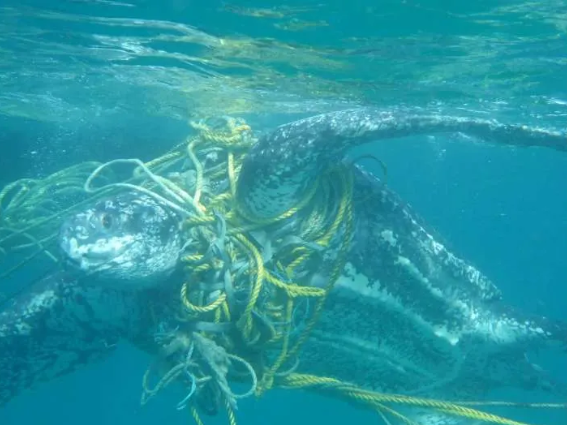
Leatherback turtles are endangered. According to the IUCN, they are classified as vulnerable, but many subpopulations, such as those in the Pacific and Southwest Atlantic, are critically endangered. The leatherback sea turtle is listed as endangered under the Endangered Species Act in the United States. In Canada, they have been designated as an endangered species under the Species at Risk Act since 2003. Additionally, the leatherback sea turtle is listed as endangered in Massachusetts and federally. The species faces significant threats including habitat destruction, climate change, human activity, and bycatch in fishing gear, contributing to their endangered status.
DO NOT LITTER!!!

Litter, particularly plastic, poses a severe threat to turtles, especially sea turtles, as they often mistake floating plastic bags and balloons for jellyfish, their primary food source. Consuming plastic can lead to fatal digestive blockages and starvation. While sea turtles have evolved various adaptations to handle jellyfish stings, such as thick skin, protective shells, and specialized esophageal linings, they are not immune to the dangers of plastic pollution. The ingestion of plastic is a more common cause of death than jellyfish stings for many species, including the leatherback sea turtle, which relies heavily on jellyfish. To protect turtles, it is crucial to avoid single-use plastics, properly dispose of trash, and participate in efforts to reduce marine litter, as this pollution directly impacts the survival of these ancient creatures.
Hi, this is a comment.
To get started with moderating, editing, and deleting comments, please visit the Comments screen in the dashboard.
Commenter avatars come from Gravatar.
its me the boy
i love you blue boy
its me the girl
HIIIIIIIIIIIIIIIIIIIIIIIIIIIIIIIIIIIIIIIIIIIIIIIIIIIIIIIIIIIIIIIIIIIIIIIIIIIIIIIIIIIIIIIIIIIIIIIIIIIIIIIIIIIIIIIIIIIIIIIIIIIIIIIIII love you
hiiiiiiiiiiiiiiiiiiiiiiiiiiiiiiiiiiiiiiiiiiiiii
hi baby your cool
love you
your cool to